Thursday, 19 April 2012

Week Seven: Public Media


This week’s lecture looked at the Public Media; its role in society, the major corporations involved and the media they produce, and challenges they face and the future of public media.

In essence, a public media corporation is one whose purpose or mission is to serve and engage with the public, and not to gain profit. Public media corporations can make a profit, but this profit will ultimately be fed back into the corporations’ media production. In Australia, there are two major players in public media; the Australian Broadcasting Corporation (ABC) and the Special Broadcasting Service (SBS).
For eighty-nine years, the ABC has changed to reflect our national identity in its attempt to be what Dr Redman describes as “a tacit answer to the kind of nation we though we ought to be.”

The ABC is a government-funded corporation, owned by the citizens of Australia. Based on the BBC model, it was initially created as a ‘nation-building’ project in 1923 to create a sense of unity by equally spreading information among the then young nation. The ABC has always been regarded these days as a highly professional and reliable source of quality information. It has always been aimed at acting as what Dr Redman described as “a tacit answer to the kind of nation we though we ought to be.” Thus, just as our national identity has changed over time, the ABC’s character has changed accordingly. Initially, the ABC took the approach of reflecting the mother country, and many ABC presenters appeared to speak with a stronger English accent than most BBC presenters. These days, the ABC is focusing on connecting with younger generations in a similar way to Chanel 4 in the UK – though it is no easy task to get rid of its perception as being ‘Aunty ABC.’


The ABC’s pride and joy is its ‘News CAFF’ – productions like 4Corners and Q&A that are about importance over interest. Like many other public media corporations, the approach is ‘broadsheet’ over ‘tabloid’. Robert Richter described the public media as the “last bastion of long-from investigative journalism.” The ABC has demonstrated this; investigations into live cattle export, the moonlight state and high tension within the labour party all resulted in genuine political outcomes in parliament. Once again, this demonstrates public media’s role in democratic society. In addition to News Caff, the ABC produces numerous shows to connect with younger generations; Triple J, Good Game, ABC3 and Hungry Beast just to name a few.

The SBS receives significant funding from the government, on top of revenue from ‘The World Game Shop’ and the semi-commercial business model that it employs. Thus, there is some advertisement but revenue ultimately feeds back into further SBS productions. Launched as chanel 0/28 in 1980, the Special Broadcasting Service has a strong ethnic and multicultural focus. It produces shows like Living Black, Insight and Go back to where you came from, as well as entertainment productions including Wilfred and Rockwiz. The most successful productions to come from the SBS are the World Game, and SBS World News Australia – shows that are relevant to all Australian citizens.


 So what is the role and purpose of public media in democratic society? All public media, by definition, aims to engage with and serve the public. Although different corporations around the world define this aim differently, they are all heavily focused on the following:
  •       Public consultation
  •       Geographical universality
  •       Weighing public value against market interest
  •       Distancing produced media from vested interests.

The BBC defines its purpose as “embedding a public service ethos.” 

In addition to this purpose, the public media serves an even more significant role; to be completely unbiased in terms of political issues, to be completely removed from any specific political ideology, and to hold the government to account.  This means that corporations funded by the government (i.e the ABC) must conditionally bight the hand that feeds them. This relationship seems absurd, but such is the democratic role of public media. The importance of public media in democratic society cannot be denied. As Dr Redman put it, “the minute the government starts to like the ABC, we’re buggered.”

There are a number of  key problems that face public media in Australia. Firstly, there is the need to remove the ‘mature aged’ stigma that comes with non-commercial television. Secondly, there is the issue of funds. In the UK, a television subscription licence is used to generate funds, on top of government funding and revenue from ‘BBC Worldwide.’ This is not the case in Australia. The ABC must rely on just two means of income; government funding (which is limited) and the revenue from ABC Commercial (selling footage to producers and programs to the public). This is barely enough money for the kind of quality productions that the ABC demands, and ABC News24 had to be created without any additional funding. TVNZ in New Zealand faced similar problems with funding, and made the decision to go commercial. Advertising became increasingly prevalent on TVNZ until the station ultimately became consumed by commercial owners. Thus, New Zealand effectively lost its public media. Although the ABC and SBS struggle with funding and  public perception, they are safe for now. The Australian public media is a treasure in a capitalist media landscape; its downfall would be an immeasurable loss to social minority groups, the general public and democratic society. 


Life on Mars

NASA researchers say there is a 99% certainty of life on Mars after a re-analysis of data recorded in the 1970s. My alien-filled childhood dreams have at last come true:


Marketing and Money Making with Mickey Mouse Media


It cannot be denied that the commercial media dominates Australian Television, Radio and Newspapers. Surely this is a good thing; instead of having a government dictate the information that reaches the general public, like in so many countries, private companies can broadcast whatever they want (within reason). The non-governmental media organisations that arose with the intention of gaining profit – the commercial media – was the focus of this week’s lecture. We looked at its form , its function and its flaws.  

In Australia, the biggest players in the business of newspapers are Fairfax Media, News Limited and APN. Regarding television, channels Seven and Nine compete for views from the general public, while Ten takes an adolescent angle. The largest two radio corporations are ARN and Austerio .


The private media’s form is based on subscription and sponsorship; its function, of course, is commercial. Dr. Redman made the point that advertisers are the true customers of commercial media, not readers, viewers or listeners. So if we’re not customers than what are we? Because we are not paying for a service (in the case of free to air TV), it is reasonable to assume that we are in face the products being sold:


 As an aside, I found it rather ironic that the commercial media’s alternate function is the production of propaganda. In a strange turn of events, the public media is more balanced (regarding political matters) than the ‘free’ commercial media. I found this quite interesting.

It is worth mentioning commercial media’s eternal struggle – to generate profit while delivering quality material (‘public trust’). The question is, what do the media corporations care about more? I don’t mean to sound depressing but I think we all know the answer to that question. Sadly, I think John McManus hit the nail on the head; “profit over-rides social responsibility.” It is apparent that the ethical wall separating the free media’s commercial and social functions (analogous to the segregation of church and state) has indeed been compromised.

In saying this, however, according to the the Hutchins Commission (1947), commercial media is required to provide “full access to the day’s intelligence.” What a charming thought.

Here’s a selection of the commercial television shows being broadcasted on the evening I wrote this blog: The 7pm Project (technically now ‘The Project’ due to an unfortunate re-scheduling), ‘World’s Strictest Parents’ and ‘The Biggest Loser.’ Clearly today provided little intelligence.

The fourth section of the Hutchins Commission states that the commercial media is responsible for “the presentation and clarification of the goals and values of the society.” I find this very interesting. To be honest, I’m not exactly sure what the ‘goals’ of our society are, but if they are reflected in the commercial media’s output then it’s time I started packing my bags.

Surely our society is not reflected in such superficial glib. Sadly, mouse clicks reveal all. The data shows that celebrity shenanigans, UFO sightings and movie stars without makeup are what draws the most attention. Websites compete for views, and as such the result is tabloidisation and a ‘dumbed-down’ online media. 

Broadcast media is also starting to show signs of tabloidization. Advertising revenue for broadcast media has quickly declined. This means less revenue and consequently less money for quality production, more affordable foreign imports and more programs that grab viewer attention as quickly as possible.  Does this mean that there will be no escape from low-quality, attention-grabbing media output both online and on television?

It’s not all doom and gloom. Sites like theglobalmail.org aim to stand out and draw in readers with quality rather than tabloid style attention-grabbing techniques. Furthermore, public news corporations such as the ABC are not for profit and consequently do not have an ethical wall dilemma to deal with. Or at least that is what can be assumed. We will just have to wait until next week to see. 


Wednesday, 18 April 2012

The Inner Life

The other day my biology tutor showed me this animation. It accurately illustrates the beautifully organised chaos that is undergone continuously in every cell of your body. 

Week Five: Telling Stories, literally

This week I was introduced to the world of storytelling through sound through an interview with two masters of Radio –Richard Fidler and the Steve Austin.

Humans are good at talking; it’s what we do best. Our ability to speak (and consequently to express complex ideas and emotions through language) are genetically programmed into our genome*. Even with our big brains, we wouldn’t have gotten far without the ability to communicate our big fancy thoughts. As such, the most natural way that we tell stories is by literally telling them. 

It took a lot of talking before humans started painting on walls, and then a lot more after that before we started writing down our words. It wasn’t until the age of the Greeks that we started acting out our stories for others’ entertainment. Language (and therefore storytelling) is, at its core, spoken, not written or seen.

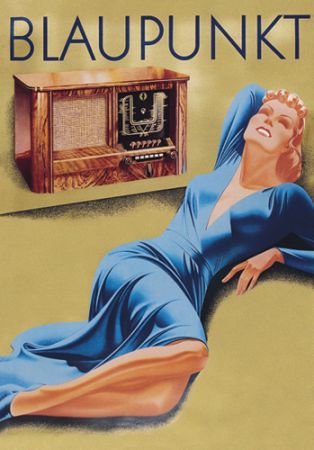
Perhaps this is why radio – the oldest electronic media platform – is actually growing, while its brothers shrink under the crippling weight of the new media.  It would seem that the radio star is finally having his sweet revenge.


 Radio has been an important media platform throughout the world for almost a century, and even today it continues to grow. 


One might mistakenly think that television makes radio redundant, it being essentially the same thing with the exception that viewers get to see what is being spoken about. While seeing the subject of a story has its benefits, radio serves its own purpose in journalism and is in no way inferior to television. Richard Fidler explains; “the voice you hear doesn’t really come at you [as it does on TV], it seems to almost come from inside your head.”

The subtle advantage of radio (and podcasts) as a platform for story telling is that it removes unnecessary complexity and allows the listener to absorb what is being said. I would liken this to music videos. I think music videos are great – but simply the sound of the musicians is more captivating when I want to enjoy my favourite music.

Similarly, radio removes the complexity of images, permitting the mind to be engrossed in the story being told and allowing the imagination to wander. “The theatre of the imagination” is a rather corny way to describe radio, but I think it is accurate.

In this way it is a much more poignant platform for human interest pieces. The advantage of news, information and other journalistic stories on radio is that it allows a time-poor audience to multi-task – a quality that Steve Austin attributes to the revival of the platform. 

Radio has survived as a media platform for a long time, and even in the face of the new media it continues to grow. This is a result of its simplicity and effectiveness. Even if traditional radio eventually becomes out-dated, its legacy will undoubtedly live on in newer technology like Podcasts. For now at least, as always, it serves as a powerful and relevant platform for journalism.

*Copp, et al (2005) <http://www.nature.com/nrn/journal/v6/n2/abs/nrn1605.html> 


Tuesday, 17 April 2012

Stories without words


If there’s one big thing that I have learned in the past four weeks, it is that Journalists are story tellers. Entertaining and informing through the telling of factual stories is what we do. Some stories are best told without written words; some stories are told without any form of structured language at all. Thus, we employ the power of the image.

Humans have evolved to observe the world around them with our keen sense of sight.As such, images speak to both the mind and the heart – they can evoke powerful emotion and beautifully depict an idea. 


The ancient Lascaux cave paintings. 
Stained glass windows depicting biblical stories that resonate with those the illiterate. Images recorded emotion and thought for the use of further generations far before words did.

It took quite some time for images to be incorporated into journalism – the 1860s illustrated line drawings provided a whole new way for readers to connect with stories, and just two decades later the age of news photojournalism was born. From 1936 onwards, readers could witness the news of the day “in nature’s hues.”


The first news line drawing graces the front page of Harper’s weekly. The first coloured news photo ‘in nature’s hues’ features in the Daily Record. 


Many years later, with the advent of digital photography, came a new age for both journalism and society in general. Thousands of images were able to be captured and uploaded with ease – making it so much easier to capture the moment. The photograph was no longer used to embellish news stories, they could be employed to tell the story itself.


 “If it makes you laugh,  if it makes you cry, if it rips out your heart, that’s a good picture" (Eddie Adams).  Legendary photographer Steve McCurry captures the essence of the moment, and with it the hearts and minds of the viewers. Photojournalism is now seen as a new and powerful medium for contemporary journalism. 


With the creative freedom accompanying digital photography and modern photojournalism came the sinister side-effects of digital manipulation (faux-tography). Photographs were no longer necessarily a sincere and realistic snapshot of a place and time, but an image that could be manipulated and distorted at the publisher’s discretion. Thus, celebrities (or indeed anyone published in a magazine) can become impossibly beautiful, almost inhuman creatures.


Any discussion on story telling with images wouldn’t be complete without mentioning the power of the moving pictures. Motion pictures and photography have developed in similar ways, have essentially the same impact on an audience and play a similar role in modern society. Television and all the forms associated with it are, of course, based entirely on the concept of the motion picture. The key difference is that photographs are about capturing the moment, while film is about capturing the scene. Both are equally important and suitably serve their respective purpose in different forms of journalism.
 

To conclude, images – whether moving or still – have the capacity to tell stories in a far more profound way that words. The viewer can be transported, inspired and mesmerised and as such photojournalists can exploit their audiences to tell stories in entirely new ways.  In contemporary journalism and all media platforms excluding radio, the image is just as integral as the word. 


Monday, 16 April 2012

Week Three: Text


While many aspects of journalism have transformed over time, text has always remained intrinsically linked to telling factual stories – and I think this will always be the case.
Text is nothing more and nothing less than written language; the use of twenty-six letters placed in a specific sequence in a particular font to covey meaning. It is simple but powerful. 


Text dominates both the old and new media, this cannot be denied. Every day we use text to search the web; it makes up the headlines, bylines, captions and pull quotes that constitute any article published on the internet. Tags, blogs, tweets, statuses, comments and emails are all built from the journalists’ best friend, text.  The new media presents innovative ways to use text; tags, for example, have become essential to online writers. Hypertext allows information to be presented in creative, interactive and non-linear ways; readers can explore stories in ways previously unimaginable. 


The point that I thought was most important in this week’s lecture wasn’t about the way text can be used, but rather the impact of quality writing. I firmly believe that no matter how much you dress up text with italic font, non-linear narratives and pretty pictures, the quality of writing will always have the greater impact. This might seem too trite to even mention, but I think it’s a very important point. Regardless of the media used, good writing is good story-telling, and good story-telling is good journalism.

Some might argue that the internet has degraded the quality of writing in people of our generation. On the contrary, with so much information available on the web writers need to stand out through the quality of their work. By enforcing a limited number of characters to use, sites like Twitter push writers to succinctly tell complex and meaningful stories. Earnest Hemmingway beautifully demonstrated the way that a limited word count brings out the writer’s genuine skill at manipulating language in his short story of six words: “for sale: baby shoes, never worn.”

Some might argue that the internet has degraded the quality of writing in people of our generation. On the contrary, with so much information available on the web writers need to stand out through the quality of their work. By enforcing a limited number of characters to use, sites like Twitter push writers to succinctly tell complex and meaningful stories. Earnest Hemmingway beautifully demonstrated the way that a limited word count brings out the writer’s genuine skill at manipulating language in his short story of six words: “for sale: baby shoes, never worn.”

Tumblr (and its ugly older brother, Blogger) promotes creativity and the development of an individual writing style while writing for online newspapers involves the use of novel and abstract news report structures. Just as it was in its heyday a century ago, text-based journalism is a diverse and exciting medium for telling stories.